
Kenya
Samburu
Rugged northern landscapes and wildlife found nowhere else in Kenya.
Know before you go
Welcome to Samburu
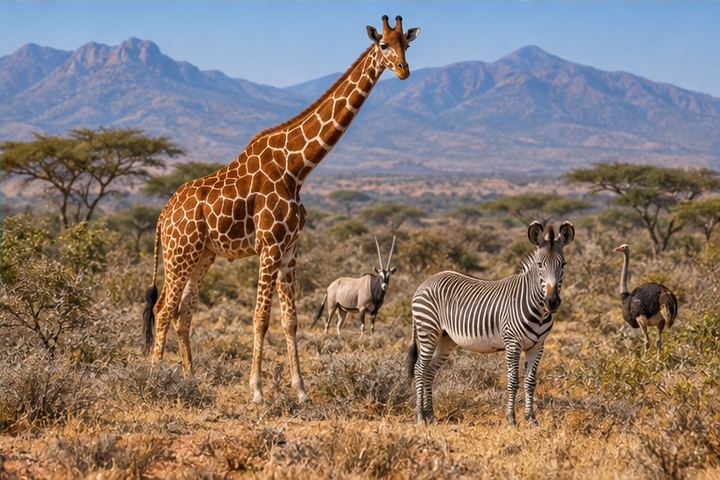
Dry, rugged country north of the equator where the wildlife is genuinely different. Grevy's zebra, reticulated giraffe, gerenuk, beisa oryx and Somali ostrich occur here and largely not further south — the so-called Samburu Special Five.
Plan with confidence
Make Samburu work for you
Highlights
- The Special Five — species you will not tick off in the Mara or Amboseli
- Big cats along the Ewaso Ng'iro, with leopard sightings unusually reliable in the riverine forest
- Doum palms and red earth, a landscape that photographs quite unlike the southern parks
- Samburu cultural visits, where the community connection to the conservancies is direct and current
- Neighbouring conservancies with strong community-owned conservation records
Getting around
- Light aircraft from Nairobi is the straightforward option; the road takes most of a day.
- A 4x4 is essential — riverbed crossings and rocky tracks throughout.
- Often combined with Mount Kenya or the Laikipia conservancies to the south.
Good to know
- Three to four nights, particularly if you have come up by road.
- It is hot. Plan around early mornings and late afternoons and rest through the middle of the day.
- The dry months concentrate animals on the river, which makes viewing considerably easier.
- Bring more sun protection than you think — there is little shade and the light is fierce.
Flash flooding in the Ewaso Ng'iro can be sudden and is taken seriously locally — follow camp guidance about riverbeds. Camps are generally unfenced; accept the escort after dark.
Before you book
Samburu questions, answered
How is Samburu different from the Mara?
Different species, different landscape and far fewer vehicles. It is arid rather than grassland, and several of its signature animals do not occur in southern Kenya at all.
Is it worth the extra travel?
If you have already done a southern park, yes — it adds genuinely new wildlife rather than more of the same.
Curated for your journey
Experience Samburu
Orientation
Find Samburu
Use the map to understand where you’ll be, then add transport to connect every stop.
Open larger mapMake it yours
Create your trip Ready for Samburu?
Start here, then combine every stay, transfer and experience around your dates.